
A Combined Published-Research Reference List for Clients, Patients & Referring Practitioners
When people think about pain, they often focus only on the area that hurts. A painful back. A tight jaw. A stiff neck. A recurring headache.
But pain is not only influenced by muscles, joints or tissue. It is also shaped by the nervous system.
At Be Better Health & Wellness, we often look at the body through a wider clinical lens: the body, brain and being are connected. Stress, sleep, breathing, digestion, inflammation and emotional load can all influence how the body experiences discomfort.
One important part of this bigger picture is the vagus nerve.
The vagus nerve plays a key role in helping the body regulate stress, recovery, digestion, inflammation and calm. When the nervous system is under pressure for too long, pain sensitivity may increase, recovery may slow down and symptoms may feel harder to manage.
Understanding this connection can be an important step in supporting whole-person health.
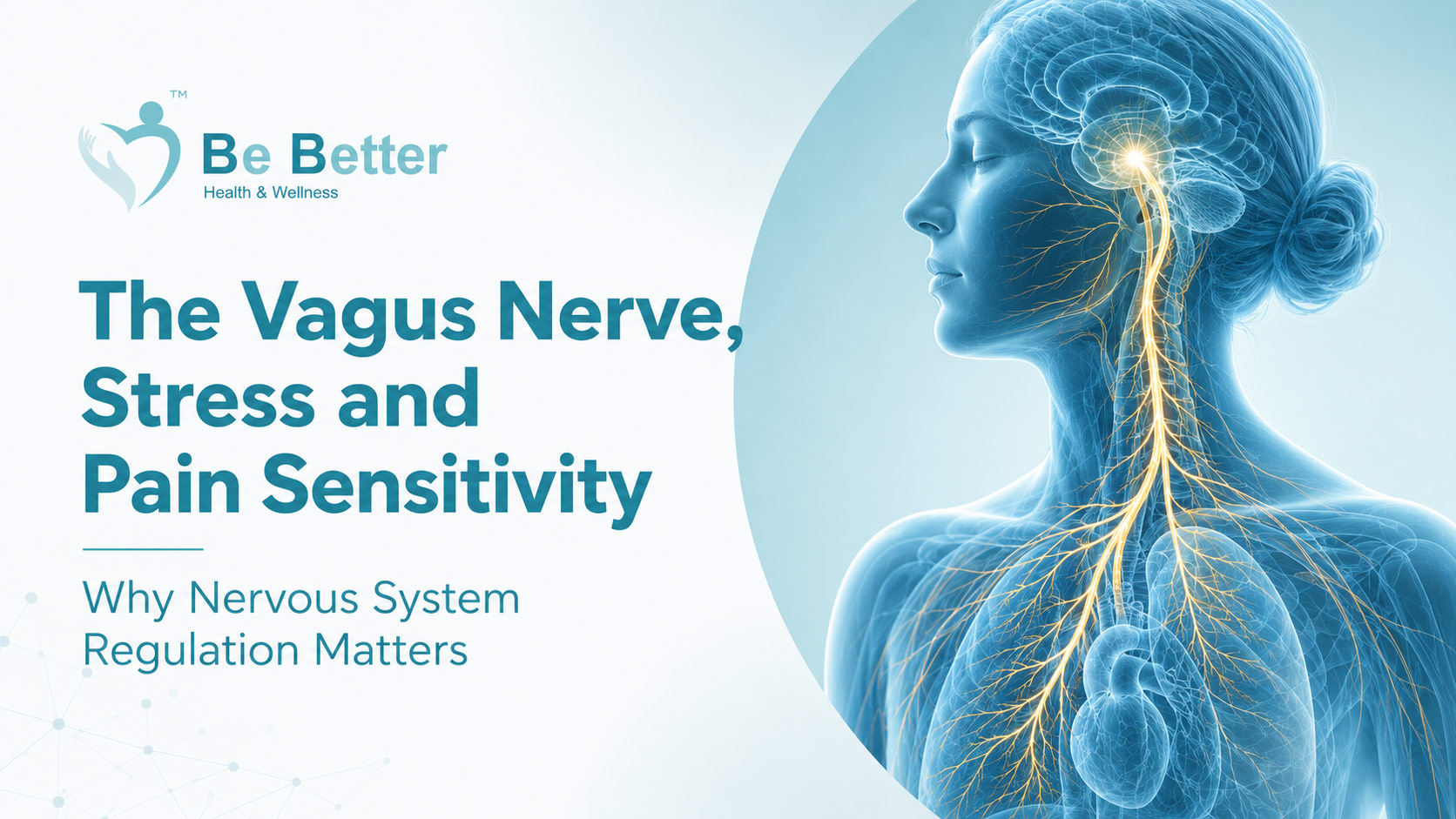
The vagus nerve is one of the main nerves involved in the body’s parasympathetic nervous system. This is often described as the “rest, digest and recover” system.
It connects the brain with many areas of the body, including the:
The vagus nerve helps the body shift out of a constant stress state and into a more regulated state.
When this system is functioning well, the body may be better able to settle, digest, recover and respond more appropriately to stress.
Stress is not only emotional. It has a physical impact on the body.
When the body is under stress, the nervous system may become more alert. This can be helpful in short bursts, but when stress becomes ongoing, the body may stay in a heightened state for too long.
This may contribute to:
For people already living with pain, chronic stress can make symptoms feel more intense or more difficult to manage.
Pain sensitivity refers to how strongly the nervous system responds to pain signals.
In some cases, the nervous system may become sensitised over time. This means it can start amplifying pain messages, even when there is no new injury or when tissue healing has already occurred.
This does not mean the pain is imagined. The pain is real.
It means the nervous system may be responding in a heightened or protective way.
Pain sensitivity may be influenced by:
This is why pain support should not only focus on the painful area. The whole system matters.
The vagus nerve helps regulate many functions that influence pain, including stress response, inflammation and recovery.
When the body is able to access a more regulated state, it may support:
This may create a more supportive environment for pain management.
At Be Better Health & Wellness, nervous system regulation is considered as part of an integrative care approach, especially for clients living with chronic pain, jaw tension, headaches, fatigue or stress-related symptoms.
Everyone experiences stress differently, but some common signs of nervous system overload may include:
If symptoms keep returning, it may be worth looking beyond the symptom and exploring the patterns that may be contributing to the body’s stress load.
Breathing is one of the simplest ways to influence the nervous system.
Slow, controlled breathing may help the body shift toward a calmer state. This does not “fix” pain instantly, but it can support regulation over time.
Simple breathing practices may help with:
A practical starting point is to pause a few times a day and ask:
“Am I breathing into my chest, or am I allowing my body to breathe more fully?”
Small awareness practices can become powerful when repeated consistently.
Sleep is one of the body’s most important recovery tools.
When sleep is poor, the nervous system may become more sensitive. This may increase pain perception, irritability, fatigue and stress reactivity.
Supporting sleep may involve looking at:
For many people, improving sleep support is an important part of pain care.
At Be Better Health & Wellness, we approach health through a whole-person framework.
This may include exploring:
The goal is not to replace medical treatment. Be Better works alongside your broader healthcare team and provides supportive, educational and integrative care.
This approach may be especially relevant for people living with:
Always consult a qualified medical professional if you experience:
Integrative care should support medical care, not replace it.
The nervous system plays a powerful role in how the body experiences stress, pain and recovery.
The vagus nerve is one part of this bigger system, helping the body move toward calm, digestion, repair and regulation.
When pain keeps returning, it may be helpful to ask:
“What is the body protecting against?”
“What patterns are keeping the system under load?”
“What support does the nervous system need?”
Understanding the body as a connected system can help you take a more informed and compassionate approach to your health.
Learn more about Be Better Health & Wellness:
https://bebetter-health.com/
Explore our online courses:
https://bebetter-health.com/courses/
The studies gathered here were selected to illustrate the supportive research base for the modalities and approaches offered at Be Better Health & Wellness. As with any evidence compendium of this kind, it reflects published, generally positive f indings rather than an exhaustive, balanced systematic review including negative or null results. Where a study’s findings were limited or did not reach statistical significance, this has been noted directly in the summary. All modalities are offered as adjunctive and supportive to conventional medical care, not as a replacement for diagnosis or treatment by a qualified medical practitioner.