Day: April 14, 2026

  • The Brain–Body Connection in Pain: Why Pain Is Not Only Physical

    The Brain–Body Connection in Pain: Why Pain Is Not Only Physical

    The Brain–Body Connection in Pain: Why Pain Is Not Only Physical

    Introduction

    Many people living with pain are told:
    “There’s nothing structurally wrong.”

    Yet the pain remains.

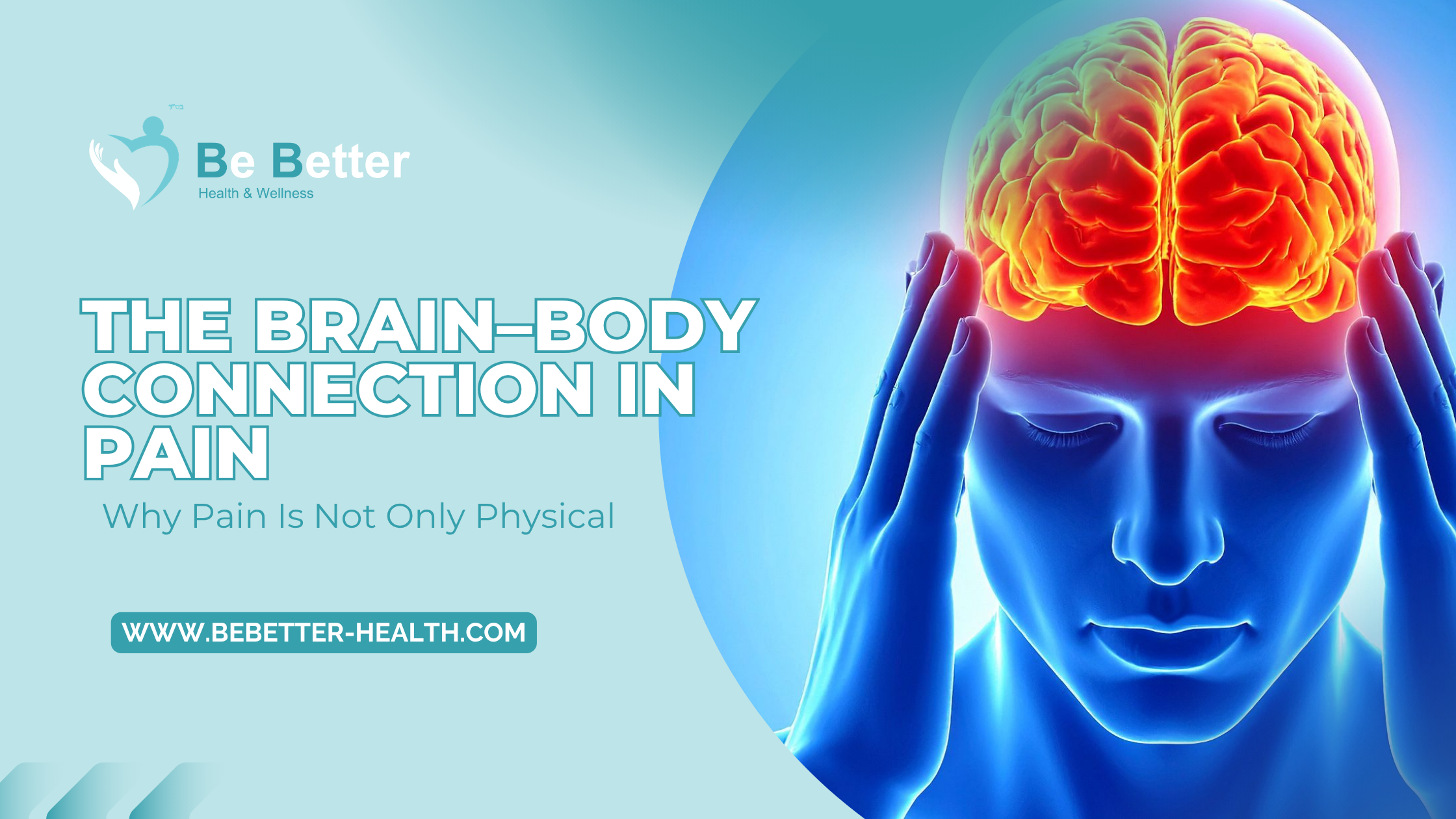
    This is because pain is not only physical — it is influenced by the brain, nervous system, and environment.

    How Pain Is Processed

    Pain is created by the brain based on:

    • Sensory input
    • Past experiences
    • Emotional state
    • Stress levels

    This means pain can persist even after tissue healing.

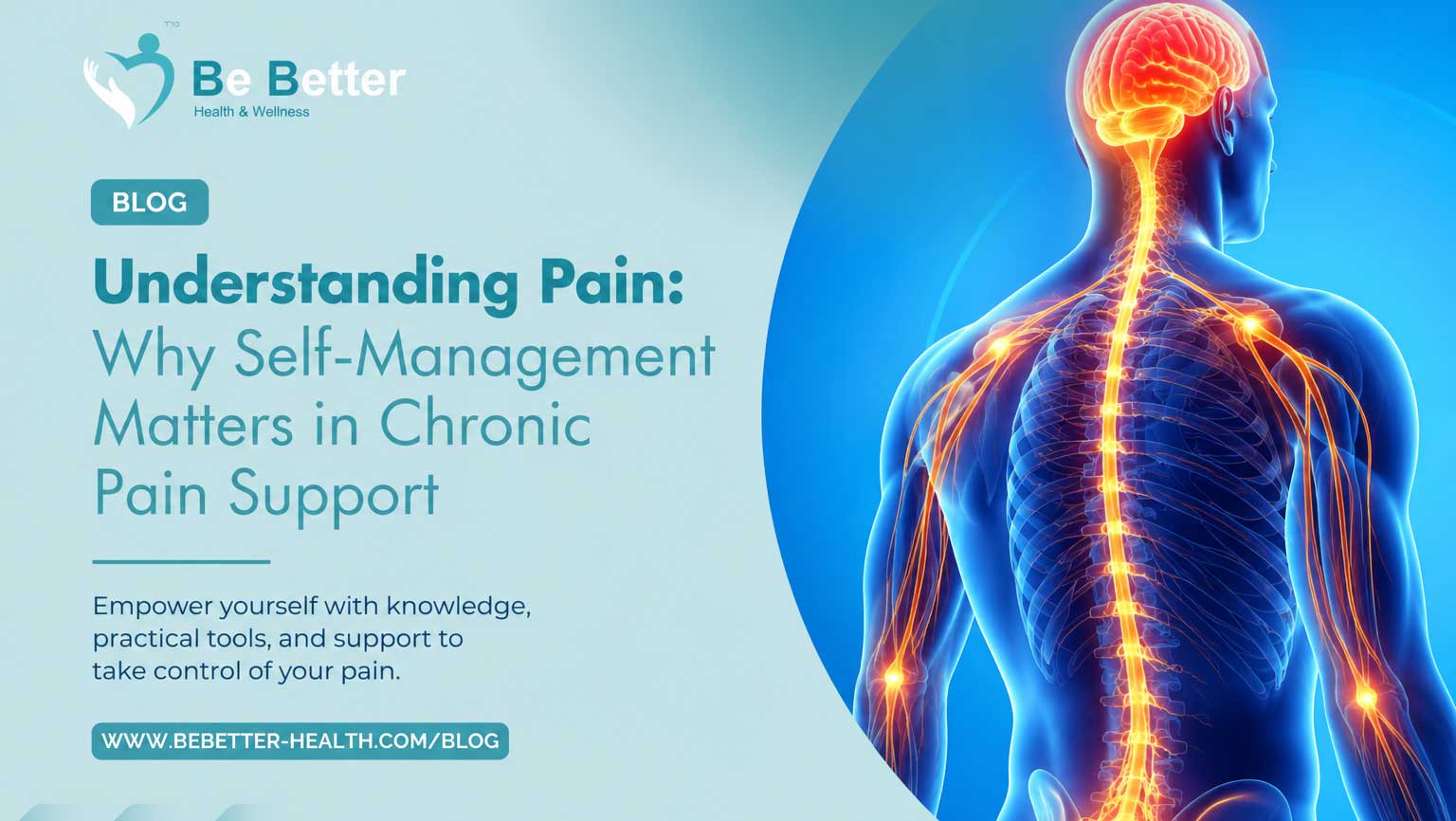
    The Role of the Nervous System

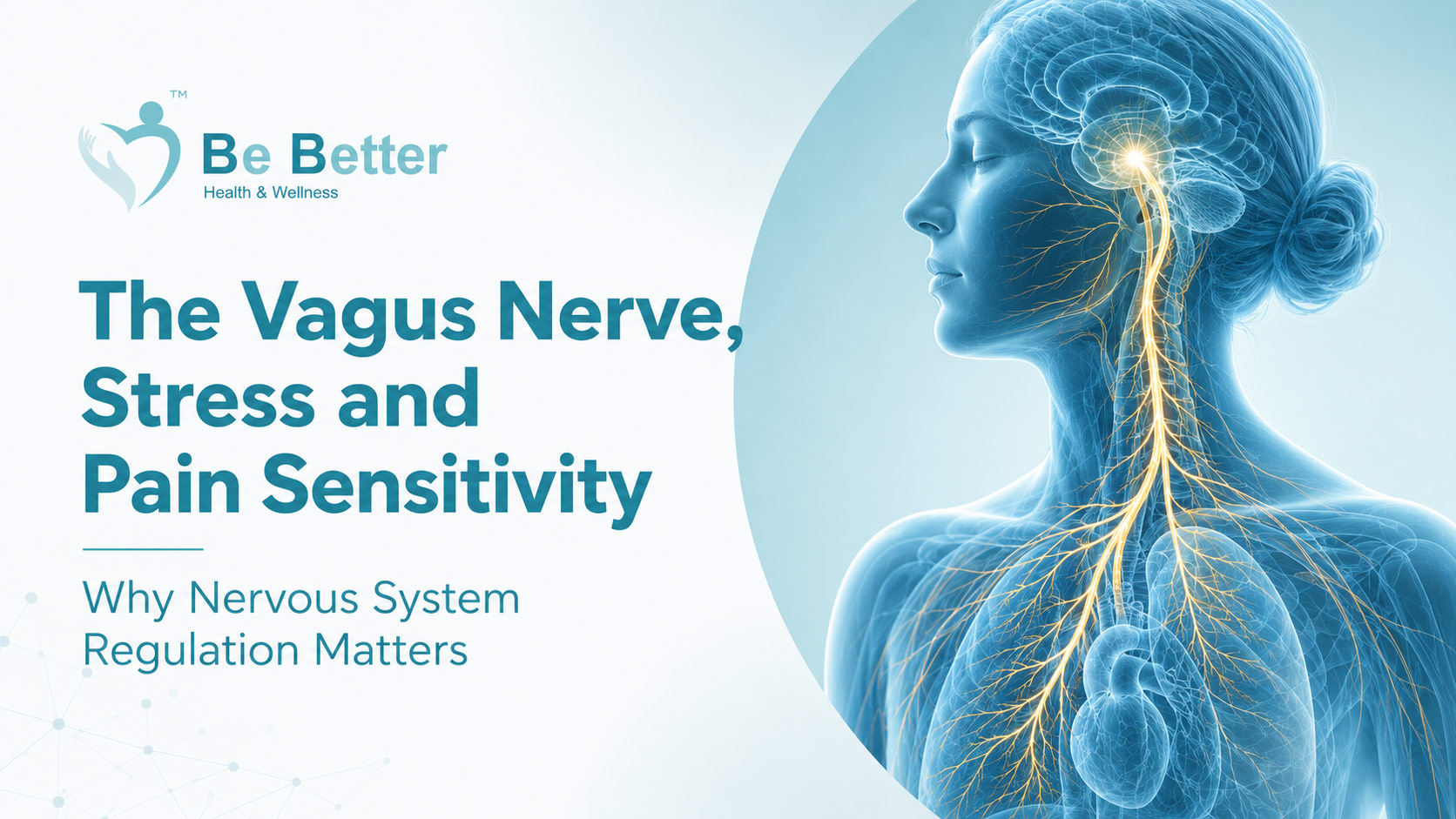
    The nervous system constantly assesses safety and threat.

    When the system is dysregulated:

    • Pain signals may increase
    • The body becomes more sensitive
    • Recovery slows down

    Stress and Pain Perception

    Chronic stress may:

    • Increase muscle tension
    • Reduce recovery
    • Heighten pain sensitivity

    This is particularly relevant in modern, high-pressure environments.

    The Brain–Body Feedback Loop

    Pain influences emotions.
    Emotions influence pain.

    This creates a loop that can maintain discomfort over time.

    Movement and Safety Signals

    Gentle movement can help:

    • Reassure the nervous system
    • Improve circulation
    • Reduce stiffness

    Avoiding movement entirely may increase sensitivity.

    Integrative Support Approach

    At Be Better Health, we support:

    • Nervous system regulation
    • Movement confidence
    • Stress awareness
    • Lifestyle balance

    This approach helps support overall function and wellbeing.

    Education Changes the Experience of Pain

    Understanding pain mechanisms may:

    • Reduce fear
    • Improve confidence
    • Support better daily choices

    The Pain Management Course provides structured education in this area.

    When to Seek Medical Advice

    Always consult a healthcare professional if symptoms are severe, worsening, or unclear.

    Conclusion

    Pain is not just in the body — it is influenced by the brain and nervous system.

    Understanding this connection may help shift how pain is experienced and managed.

    👉 Book an integrative consultation
    👉 Learn more through the Pain Management Course

    Share it :
  • TMJ, Stress, and Headaches: Understanding the Jaw–Nervous System Connection

    TMJ, Stress, and Headaches: Understanding the Jaw–Nervous System Connection

    TMJ, Stress, and Headaches: Understanding the Jaw–Nervous System Connection

    Introduction

    Do you experience:

    • Jaw tension or tightness?
    • Headaches around the temples?
    • Teeth grinding or clenching?

    These symptoms may be linked to temporomandibular joint (TMJ) dysfunction, often influenced by stress and nervous system patterns.

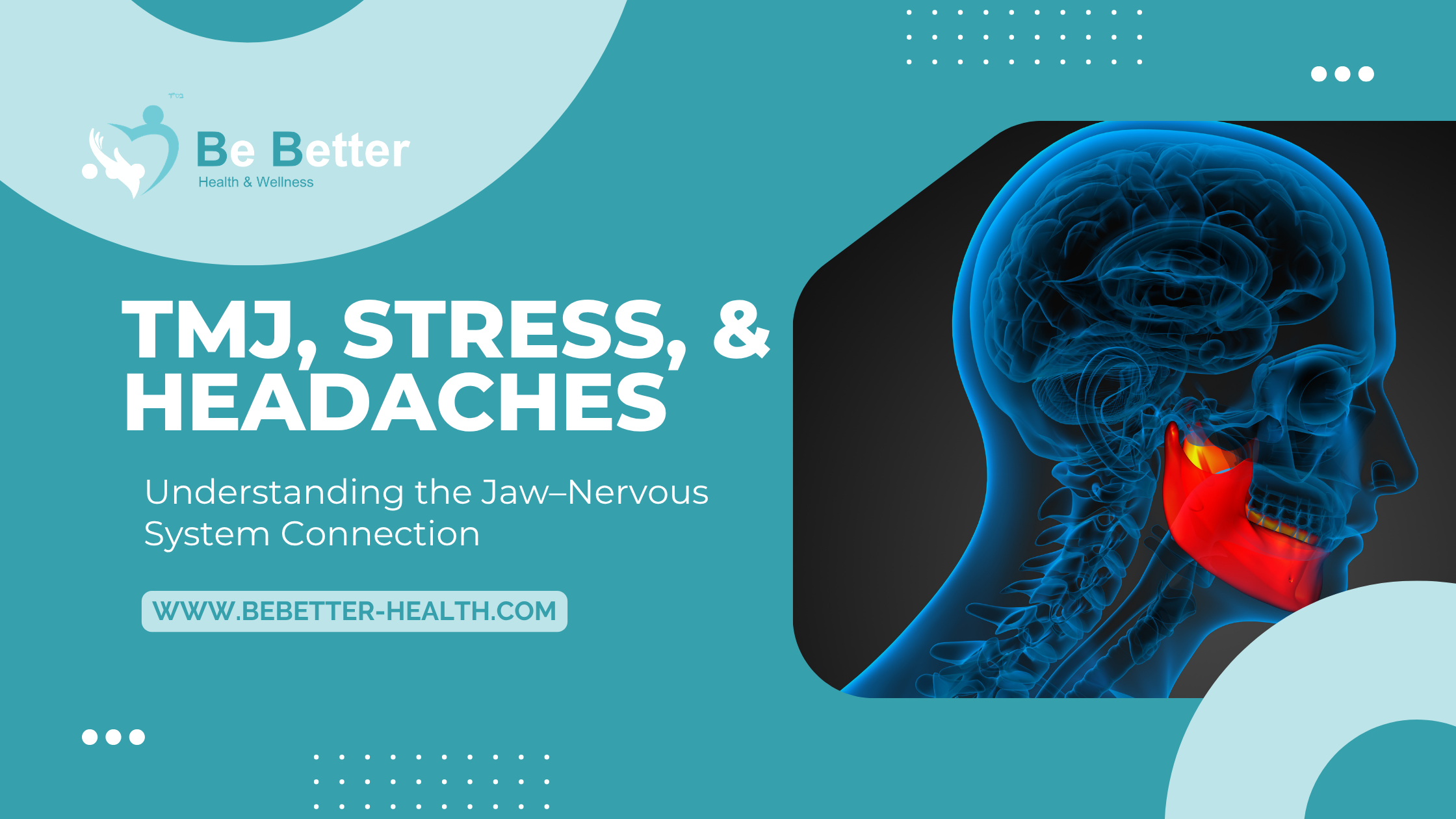
    What Is the TMJ?

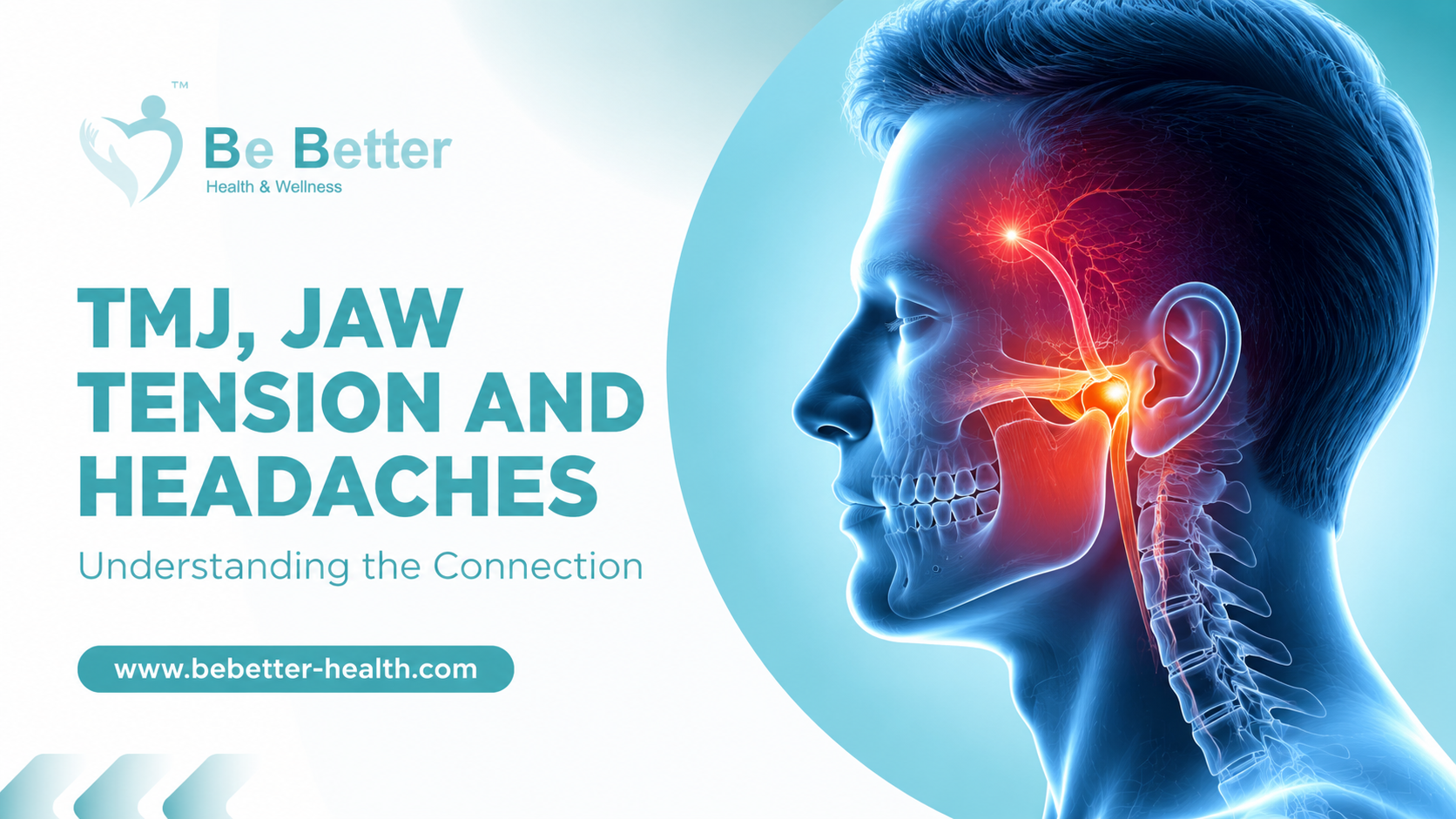
    The temporomandibular joint connects the jaw to the skull and plays a role in:

    • Chewing
    • Speaking
    • Facial movement

    It is closely connected to the neck, head, and nervous system.

    Common Signs of TMJ Dysfunction

    TMJ-related issues may present as:

    • Jaw pain or stiffness
    • Clicking or popping sounds
    • Headaches
    • Ear discomfort or pressure
    • Neck tension

    The Stress Connection

    Stress is one of the most common contributors to TMJ dysfunction.

    When stressed, many people:

    • Clench their jaw unconsciously
    • Grind their teeth (especially at night)
    • Hold tension in the face and neck

    This repeated tension can lead to ongoing discomfort.

    The Nervous System’s Role

    The nervous system regulates muscle tension.

    When the body is in a heightened stress state:

    • Muscles remain contracted
    • Recovery is reduced
    • Pain sensitivity increases

    This may explain why TMJ symptoms often worsen during stressful periods.

    Posture and Modern Lifestyle

    In South Africa, many individuals spend long hours:

    • At desks
    • On phones
    • Driving

    Forward head posture may place additional strain on the jaw and neck.

    Integrative Support for TMJ

    At Be Better Health, we assess:

    • Jaw tension patterns
    • Neck and postural influences
    • Stress-related muscle activation
    • Nervous system regulation

    The goal is to support improved function and comfort.

    TMJ Self-Management Education

    The TMJ Self-Management Course provides guidance on:

    • Jaw awareness
    • Reducing clenching habits
    • Supporting posture
    • Managing stress-related tension

    When to Seek Medical or Dental Advice

    Consult a professional if you experience:

    • Severe jaw pain
    • Locking of the jaw
    • Difficulty opening or closing the mouth

    Conclusion

    TMJ discomfort is rarely just a jaw issue.
    It is often influenced by stress, posture, and nervous system regulation.

    Understanding these connections can support better long-term management.

    👉 Book a consultation
    👉 Explore the TMJ Self-Management Course

    Share it :
  • Chronic Pain and Inflammation: Understanding the Hidden Drivers of Ongoing Discomfort

    Chronic Pain and Inflammation: Understanding the Hidden Drivers of Ongoing Discomfort

    Chronic Pain and Inflammation: Understanding the Hidden Drivers of Ongoing Discomfort

    Chronic Pain and Inflammation: Understanding the Hidden Drivers of Ongoing Discomfort

    Introduction

    Chronic pain is becoming increasingly common in South Africa, affecting individuals across all age groups — from desk-bound professionals to those managing long-term health conditions.

    While pain is often treated as a structural issue, research and clinical observation suggest that inflammation and nervous system sensitivity play a significant role in how pain develops and persists.

    Understanding these underlying factors is key to better long-term management.

    What Is Chronic Pain?

    Chronic pain is typically defined as pain lasting longer than 3 months.

    It may present as:

    • Persistent lower back pain
    • Neck and shoulder tension
    • Joint discomfort
    • Headaches
    • Widespread body pain

    Unlike acute pain, chronic pain is often influenced by multiple systems in the body — not just the original injury site.

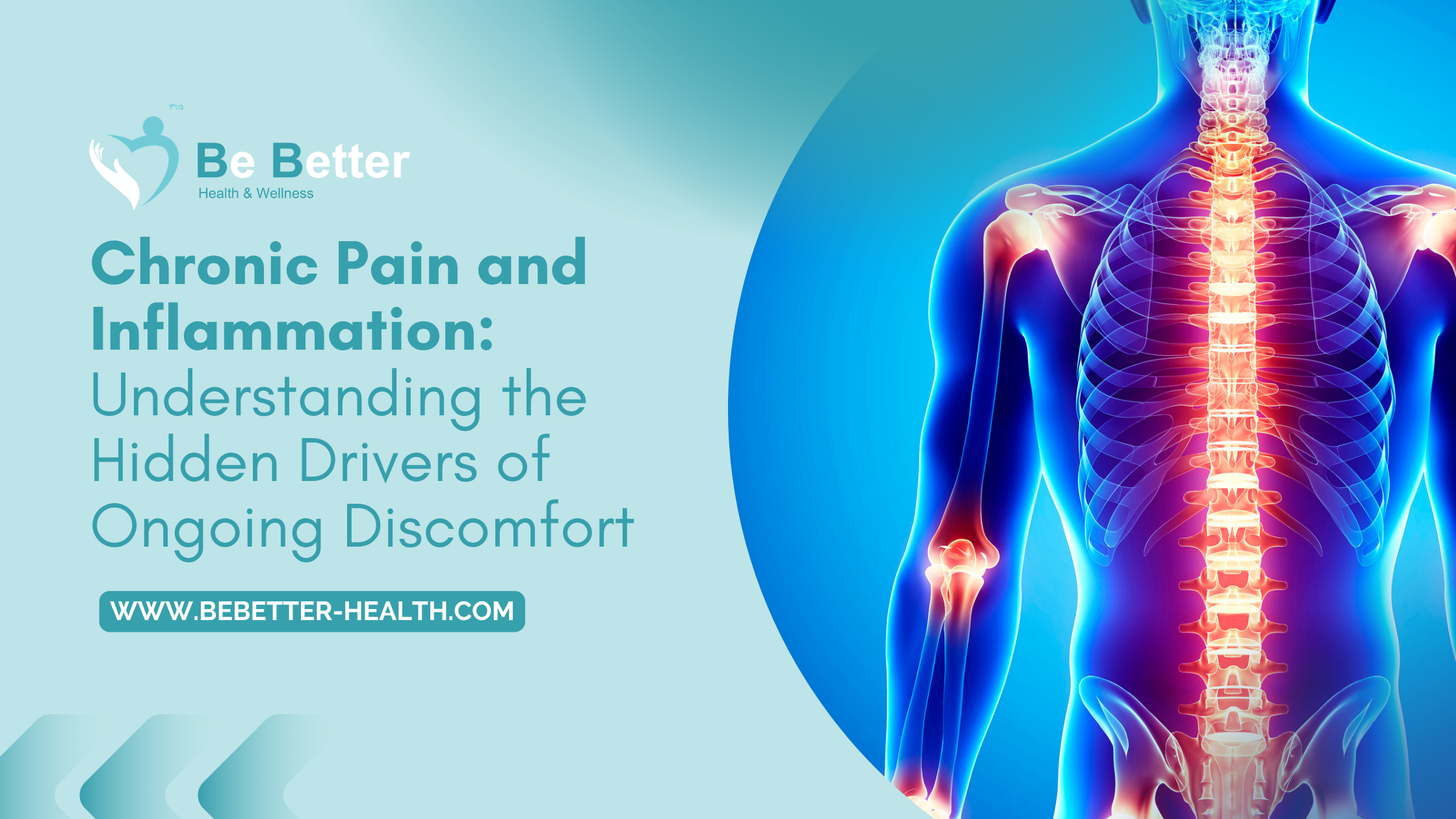
    The Role of Inflammation

    Inflammation is the body’s natural response to injury or stress. However, when inflammation becomes chronic or low-grade, it may contribute to ongoing discomfort.

    Common contributors to inflammation include:

    • Poor diet (highly processed foods)
    • Chronic stress
    • Lack of movement
    • Sleep disruption
    • Gut health imbalance

    In the South African context, lifestyle pressures, stress, and sedentary work environments may increase inflammatory load.

    The Nervous System and Pain Sensitivity

    Pain is not only physical — it is also processed by the nervous system.

    When pain persists, the nervous system may become more sensitive, meaning:

    • Pain signals are amplified
    • Minor triggers feel more intense
    • Recovery may take longer

    This is often referred to as central sensitisation.

    Stress, anxiety, and fatigue can further influence this process.

    The Pain–Inflammation–Stress Cycle

    These three factors often interact:

    • Inflammation increases pain sensitivity
    • Pain increases stress
    • Stress further drives inflammation

    Breaking this cycle requires a broader, integrative approach.

    Integrative Support Strategies

    At Be Better Health, we take a whole-body approach to pain support, which may include:

    • Nervous system regulation strategies
    • Postural and movement assessment
    • Lifestyle and stress pattern awareness
    • Sleep and recovery support
    • Functional movement guidance

    These approaches are designed to support regulation and resilience — alongside medical care.

    Education as a Key Tool

    Understanding how pain works can reduce fear and improve confidence.

    The Self-Care for Pain Management Course is designed to help you:

    • Understand pain mechanisms
    • Recognise triggers
    • Support your body daily

    When to Seek Medical Care

    Always consult a qualified medical professional if you experience:

    • Severe or worsening pain
    • Neurological symptoms
    • Sudden onset of unexplained pain

    Conclusion

    Chronic pain is rarely caused by one factor alone.
    Inflammation, stress, and nervous system sensitivity all play a role.

    Understanding these connections is the first step toward better support.

    👉 Book a consultation (Johannesburg & surrounds)
    👉 Explore the Pain Management Course
    Share it :