Introduction
Do you experience:
- Jaw tension or tightness?
- Headaches around the temples?
- Teeth grinding or clenching?
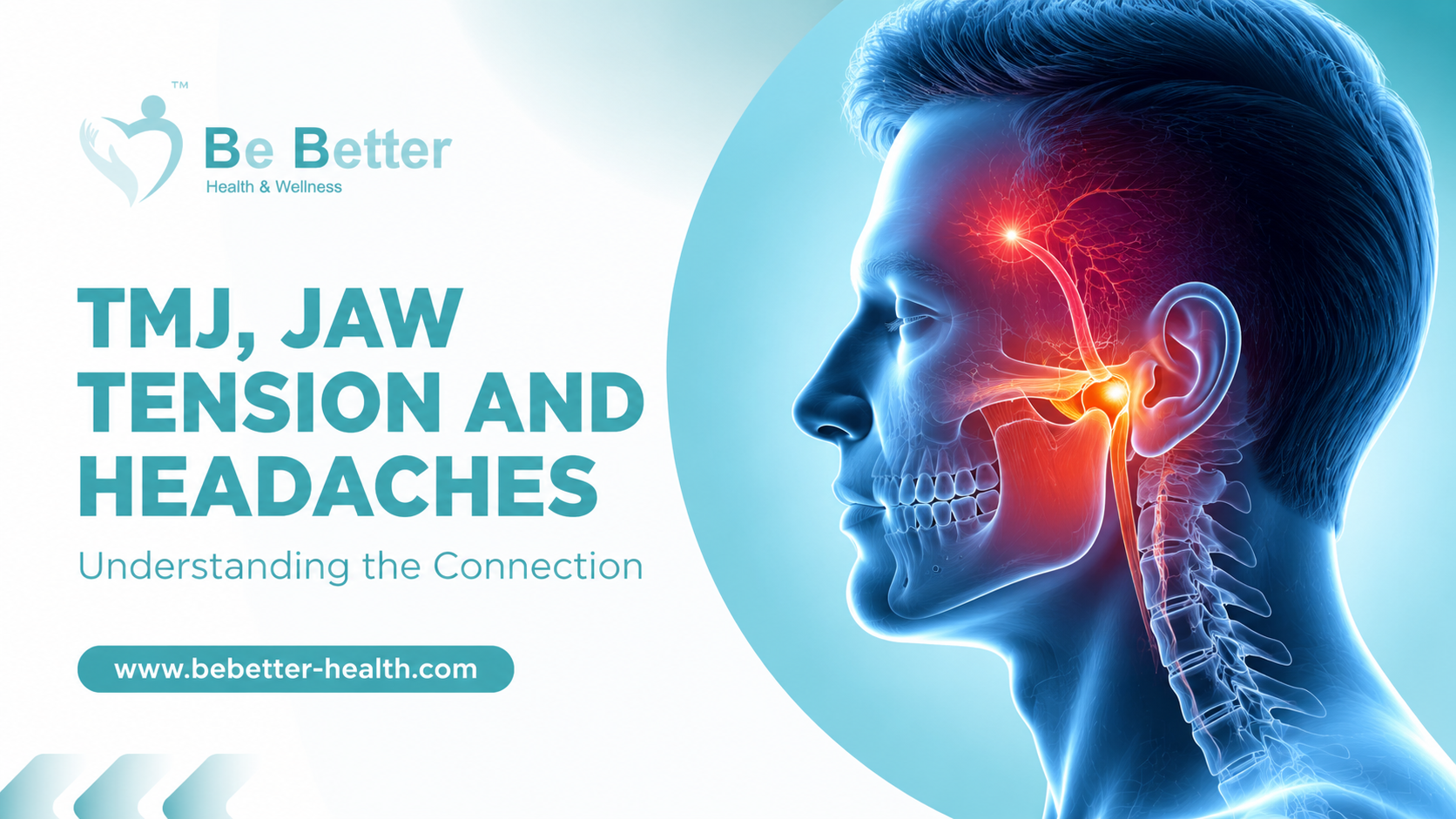
These symptoms may be linked to temporomandibular joint (TMJ) dysfunction, often influenced by stress and nervous system patterns.
What Is the TMJ?
The temporomandibular joint connects the jaw to the skull and plays a role in:
- Chewing
- Speaking
- Facial movement
It is closely connected to the neck, head, and nervous system.
Common Signs of TMJ Dysfunction
TMJ-related issues may present as:
- Jaw pain or stiffness
- Clicking or popping sounds
- Headaches
- Ear discomfort or pressure
- Neck tension
The Stress Connection
Stress is one of the most common contributors to TMJ dysfunction.
When stressed, many people:
- Clench their jaw unconsciously
- Grind their teeth (especially at night)
- Hold tension in the face and neck
This repeated tension can lead to ongoing discomfort.
The Nervous System’s Role
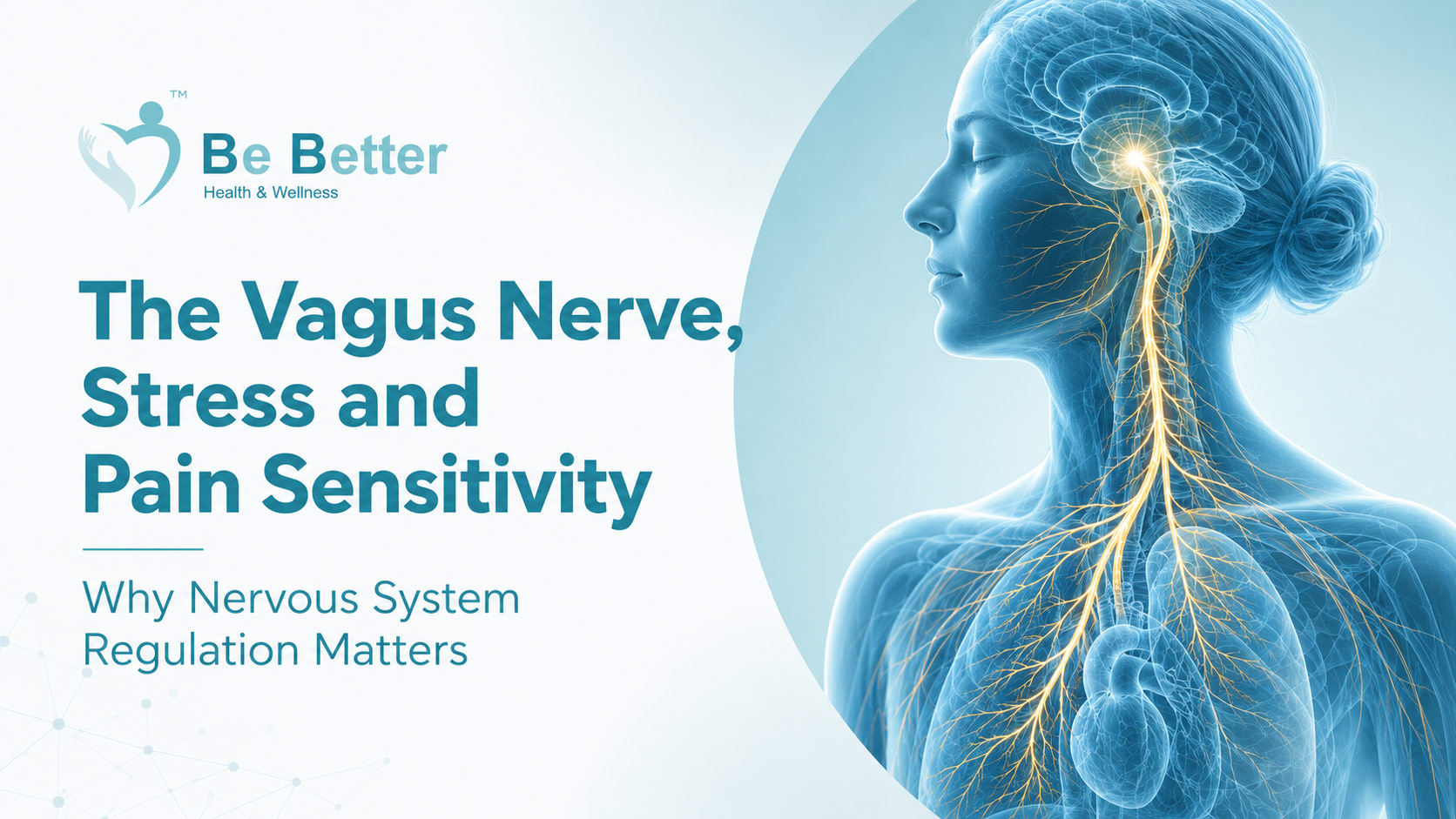
The nervous system regulates muscle tension.
When the body is in a heightened stress state:
- Muscles remain contracted
- Recovery is reduced
- Pain sensitivity increases
This may explain why TMJ symptoms often worsen during stressful periods.
Posture and Modern Lifestyle
In South Africa, many individuals spend long hours:
Forward head posture may place additional strain on the jaw and neck.
Integrative Support for TMJ
At Be Better Health, we assess:
- Jaw tension patterns
- Neck and postural influences
- Stress-related muscle activation
- Nervous system regulation
The goal is to support improved function and comfort.
TMJ Self-Management Education
The TMJ Self-Management Course provides guidance on:
- Jaw awareness
- Reducing clenching habits
- Supporting posture
- Managing stress-related tension
When to Seek Medical or Dental Advice
Consult a professional if you experience:
- Severe jaw pain
- Locking of the jaw
- Difficulty opening or closing the mouth
Conclusion
TMJ discomfort is rarely just a jaw issue.
It is often influenced by stress, posture, and nervous system regulation.
Understanding these connections can support better long-term management.
👉 Book a consultation
👉 Explore the TMJ Self-Management Course