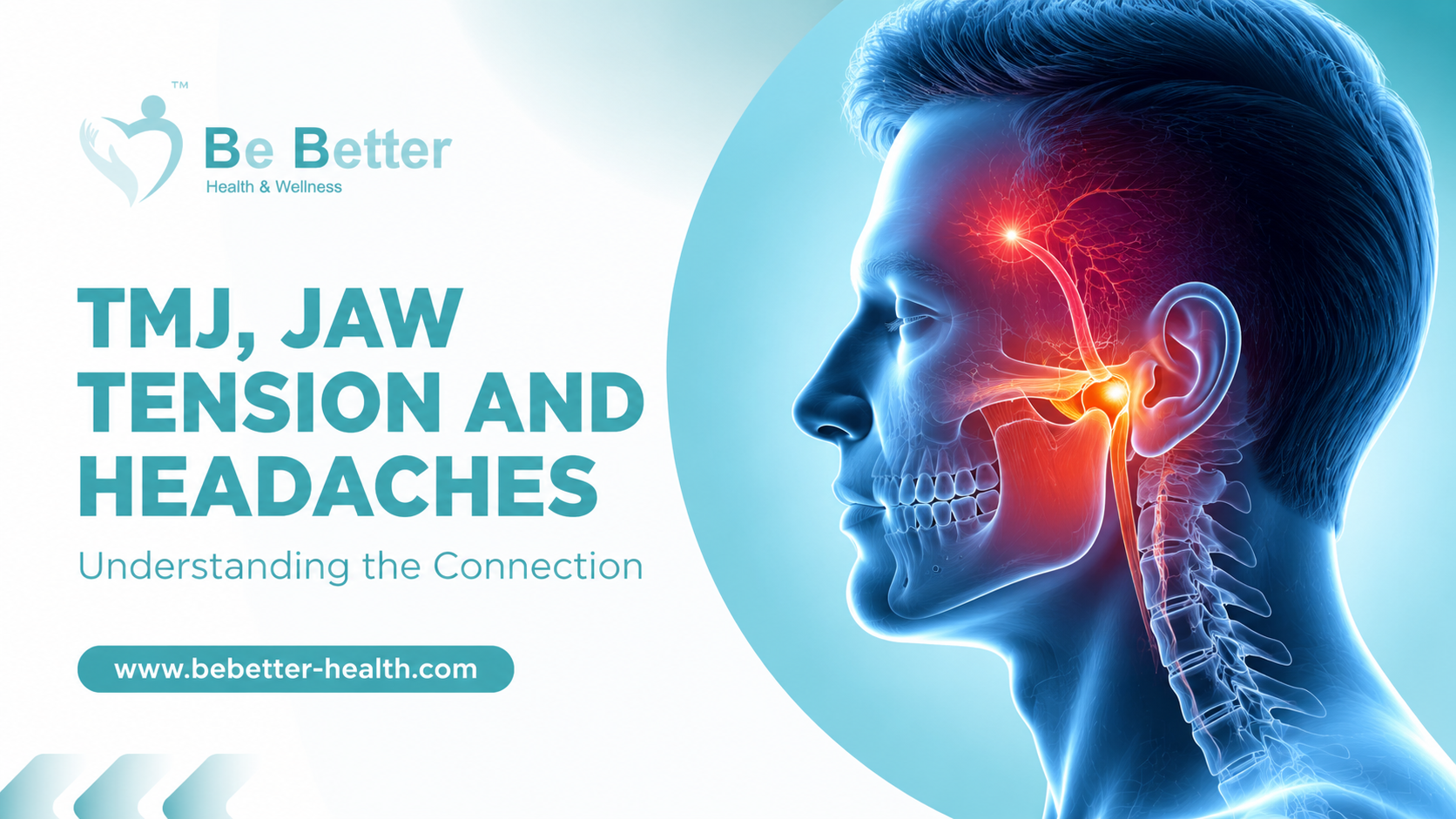
TMJ, Jaw Tension and Headaches: Understanding the connection
TMJ, Jaw Tension and Headaches: Understanding the Connection
Introduction
Jaw discomfort is often underestimated. Many people are told, “It’s just your jaw,” but anyone living with TMJ-related symptoms knows how much it can affect daily life.
TMJ dysfunction may influence eating, speaking, sleep, headaches, facial tension, ear pressure and neck discomfort. It can be frustrating, especially when symptoms keep returning or seem to spread beyond the jaw.
At Be Better Health & Wellness, we look at TMJ through a broader, integrative lens. The jaw does not work in isolation. It is connected to the skull, neck, posture, nervous system, stress response and daily habits.
Understanding this connection is an important first step in supporting jaw function and overall comfort.
What Is TMJ?
TMJ stands for the temporomandibular joint. This is the joint that connects your jawbone to your skull.
You use this joint every day when you:
- Speak
- Chew
- Yawn
- Swallow
- Smile
- Clench
- Grind your teeth
Because the TMJ is used so frequently, even small changes in function, tension or movement patterns may create noticeable discomfort over time.
Common Signs of TMJ Dysfunction
TMJ dysfunction may present differently from person to person. Some people experience obvious jaw pain, while others notice headaches, neck tension or ear discomfort first.
Common symptoms may include:
- Jaw pain or stiffness
- Clicking or popping in the jaw
- Difficulty opening the mouth fully
- Pain when chewing
- Teeth grinding or clenching
- Facial discomfort
- Temple headaches
- Ear pressure or earache without infection
- Neck and shoulder tension
- Morning jaw stiffness
- Headaches that keep returning
These symptoms may not always be caused by one single factor. TMJ discomfort is often influenced by a combination of mechanical, muscular, nervous system and lifestyle contributors.
How Jaw Tension May Contribute to Headaches
The jaw, face, head and neck are closely connected through muscles, joints, nerves and fascia.
When the jaw is tense or dysfunctional, nearby structures may also become irritated or overloaded. This may contribute to:
- Temple headaches
- Tension-type headaches
- Neck-related headaches
- Facial pressure
- Pain around the ear
- Tightness through the jaw and scalp
For some people, headaches may not actually begin in the head. They may be influenced by jaw tension, clenching, bite stress, posture or nervous system overload.
The Stress and Clenching Connection
Stress is one of the most common contributors to jaw tension.
Many people clench their jaw without realising it. This may happen:
- While working
- While concentrating
- During stressful conversations
- While driving
- During sleep
- When the nervous system is under pressure
Over time, repeated clenching or grinding may place strain on the jaw joint, facial muscles and surrounding tissues.
This is why TMJ support often needs to include nervous system regulation and stress awareness, not only jaw exercises.
Why the Neck and Posture Matter
The jaw and neck function together.
Forward head posture, long hours at a desk, phone use and poor ergonomic positioning may place extra strain on the jaw and neck muscles.
Modern working habits can contribute to:
- Neck stiffness
- Shoulder tension
- Jaw guarding
- Headaches
- Reduced movement
- Increased muscle fatigue
This is especially relevant for desk workers, students and anyone spending long hours on screens.
A whole-person approach considers posture, breathing, movement and nervous system load when looking at jaw discomfort.
TMJ and the Nervous System
The nervous system influences muscle tone, pain sensitivity and recovery.
When the body is in a constant state of stress or alertness, muscles may remain more contracted. For the jaw, this may show up as:
- Clenching
- Grinding
- Tightness
- Difficulty relaxing the face
- Increased pain sensitivity
- Headaches or facial discomfort
Supporting the nervous system may help create a more balanced environment for the jaw and surrounding structures.
Why Passive Treatment Alone May Not Be Enough
Many people with TMJ symptoms try different treatments and feel temporary relief, only for the discomfort to return.
This may happen when the underlying contributing patterns are not fully understood or addressed.
TMJ self-management can help you better understand:
- What triggers your symptoms
- How stress affects clenching
- How posture influences jaw function
- How to support the jaw during daily activities
- When to seek professional care
- How to work alongside your dentist, physiotherapist or specialist
Education gives people a clearer sense of what is happening and what they can do to support themselves between appointments.
How Be Better Health & Wellness Supports TMJ
At Be Better Health & Wellness, TMJ support is approached through an integrative clinical framework.
This may include looking at:
- Jaw tension patterns
- Cranial and neck involvement
- Posture and ergonomics
- Nervous system regulation
- Stress-related clenching
- Lifestyle contributors
- Breathing and relaxation patterns
- Supportive self-management strategies
We do not replace dental or medical diagnosis. Instead, our approach is designed to work alongside your healthcare team and support a broader understanding of your symptoms.
TMJ Self-Management Course
The TMJ Self-Management Course was created for people who want to better understand their jaw symptoms and learn supportive tools they can use at home.
This course may be helpful if you experience:
- Jaw pain or stiffness
- Clenching or grinding
- Headaches linked to jaw tension
- Neck tension
- Ear pressure
- Recurring TMJ discomfort
- Symptoms that return after treatment
The course is self-paced, educational and designed to support awareness, function and daily management. It is not a replacement for medical or dental care, but it may help you better understand what is happening and how to support your jaw more effectively.
When to Seek Professional Help
You should consult a qualified healthcare professional, dentist or specialist if you experience:
- Severe jaw pain
- Jaw locking
- Sudden bite changes
- Difficulty opening or closing the mouth
- Persistent headaches
- Neurological symptoms
- Pain that is worsening or unexplained
TMJ support works best when it is part of an appropriate care plan.
Final Thoughts
TMJ symptoms are not always limited to the jaw. They may affect your head, neck, sleep, mood, eating and daily comfort.
Understanding the connection between jaw tension, headaches, posture, stress and the nervous system may help you take a more informed approach to care.
If jaw discomfort is affecting your life, you do not have to keep working around it.
Learn more about the TMJ Self-Management Course:
https://bebetter-health.com/courses/
Or book an integrative health consultation:
https://bebetter-health.com/
Share it :
Latest Post