Do your headaches begin near your temples or jaw?
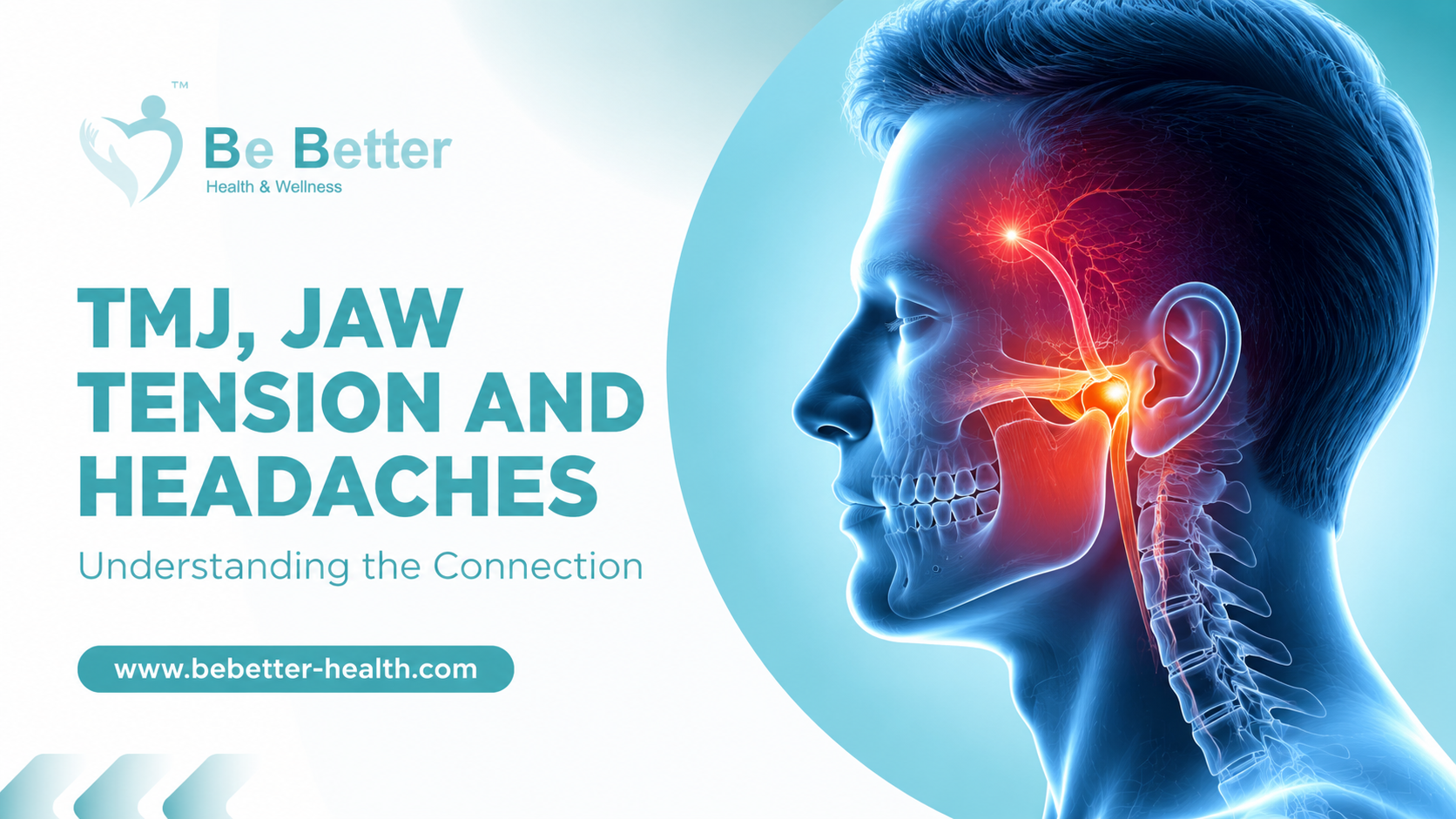
Many people do not realise that dysfunction in the temporomandibular joint (TMJ) may contribute to recurring headaches.
Understanding the jaw–head connection is key to better management.
What Is the TMJ?
The temporomandibular joint connects the jaw to the skull. It plays a role in:
- Chewing
- Speaking
- Swallowing
- Facial movement
The jaw is closely connected to neck muscles and cranial structures.
How TMJ Dysfunction May Contribute to Headaches
When the jaw experiences:
- Clenching
- Grinding (bruxism)
- Muscle imbalance
- Joint restriction
it may lead to:
- Tension headaches
- Temple pain
- Neck stiffness
- Facial soreness
- Ear pressure
Muscular tension around the jaw can refer pain upward into the head.
Stress and TMJ
Stress commonly increases jaw clenching, often unconsciously, especially at night.
This may contribute to morning headaches and jaw soreness.
Integrative Support for TMJ
At Be Better Health, integrative services focus on:
- Jaw tension assessment
- Cranial and muscular balance
- Postural contributors
- Nervous system regulation
- Stress-related muscle activation
Supportive strategies aim to improve function and regulation, alongside dental or medical care.
TMJ Self-Management Education
The TMJ Self-Management Course provides structured education on:
- Jaw awareness
- Clenching habits
- Postural influence
- Nervous system patterns
Designed to support individuals globally.
When to Consult a Medical Professional
Seek medical or dental advice if you experience:
- Locking jaw
- Severe pain
- Significant joint clicking with dysfunction
- Sudden changes in bite
Headaches may not always begin in the head.
The jaw, neck, and nervous system are interconnected.
Understanding these relationships may help improve long-term comfort and function.
👉 Book an integrative consultation (Johannesburg)
👉 Explore the TMJ Self-Management Course online