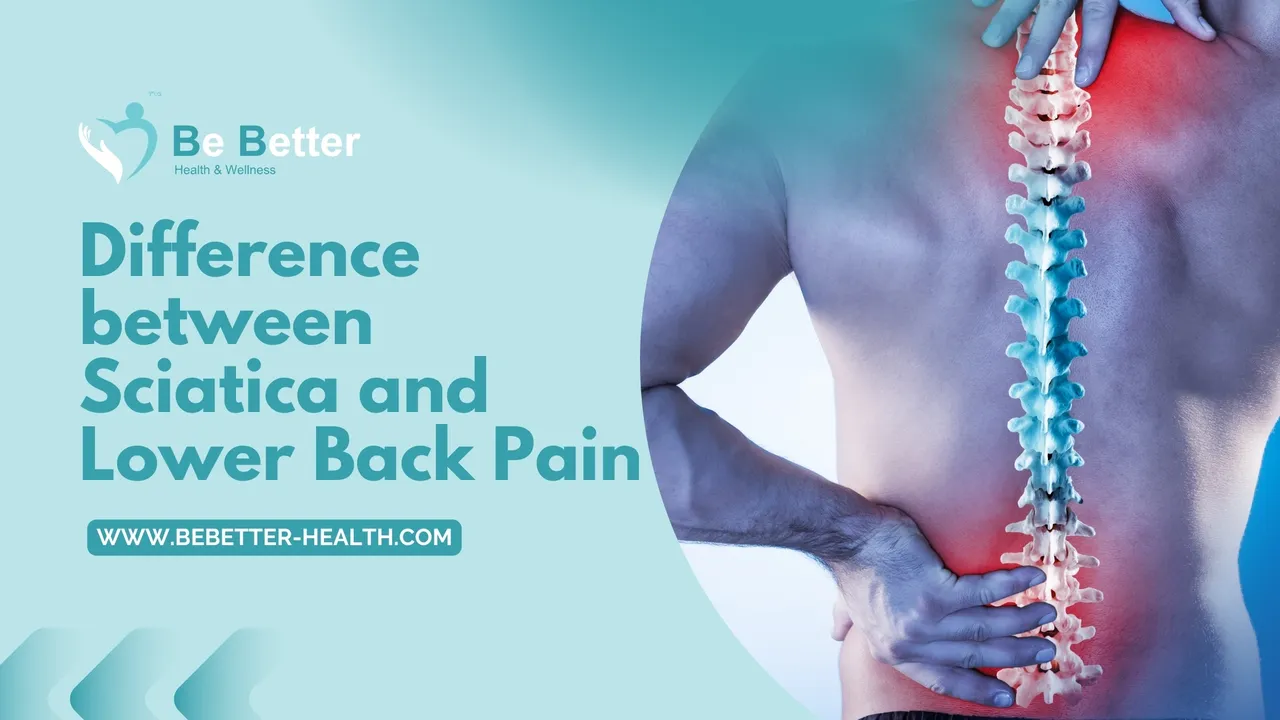
Sciatica vs Lower Back Pain
How to Tell the Difference and What to Do Next
Understanding your pain is the first step toward finding relief
You’ve been dealing with back pain for days—maybe weeks. Some mornings you wake up stiff and sore. Other times, you notice lower back pain radiating down the leg, leaving you wondering: is this just a “bad back,” or is something more specific going on?
If you’ve found yourself Googling your symptoms at 2 a.m., you’re not alone. Lower back pain affects up to 80% of adults at some point in their lives, and sciatic nerve pain—a specific type of nerve-related discomfort—was one of the most commonly misunderstood conditions I saw during my years in clinical practice.
The good news? Once you understand what’s actually happening in your body, you can take meaningful steps toward relief. Let’s break it down.
What Is Lower Back Pain?
Lower back pain is a broad term that describes discomfort anywhere in the lumbar region—the area between your ribcage and your pelvis. It can range from a dull, constant ache to a sharp, sudden pain that stops you in your tracks.
Common causes include muscle strain from overexertion or poor posture, ligament sprains, joint dysfunction, degenerative disc changes, and prolonged sitting or standing. The pain typically stays localised to the lower back, though it may spread across your hips or into your buttocks. Most episodes of mechanical lower back pain improve within a few weeks with appropriate care.
What Is Sciatica?
Sciatica isn’t actually a diagnosis—it’s a description of symptoms caused by irritation or compression of the sciatic nerve. This nerve, the longest and thickest in your body, runs from your lower spine, through your buttocks, and down each leg to your feet.
When something presses on or irritates this nerve, the result is sciatic nerve pain—a distinctive pattern of symptoms that travels along the nerve’s pathway. This is why so many people describe their experience as nerve pain in leg that seems to come from nowhere, or lower back pain radiating down the leg in a way that feels different from ordinary muscle soreness.
Understanding the Causes of Sciatica
To effectively address sciatic nerve pain, it helps to understand what’s actually creating the problem. The causes of sciatica typically fall into several categories.
Herniated or bulging discs are the most common culprit. When the soft inner material of a spinal disc pushes through its outer layer, it can press directly on the sciatic nerve root. This often occurs at the L4-L5 or L5-S1 levels of the spine.
Spinal stenosis—a narrowing of the spinal canal—can compress the nerve roots that form the sciatic nerve. This is more common as we age and is often associated with degenerative changes in the spine.
Piriformis syndrome occurs when the piriformis muscle, located deep in the buttock, tightens or spasms and irritates the sciatic nerve that runs beneath (or sometimes through) it. This is a frequently overlooked cause of sciatica, particularly in people who sit for long periods.
Spondylolisthesis, where one vertebra slips forward over another, can narrow the space through which the nerve exits, creating compression.
Degenerative disc disease and age-related changes can gradually reduce the space available for nerve roots, leading to irritation over time.
Less commonly, the causes of sciatica may include tumours, infections, or trauma. This is why persistent or unusual symptoms always warrant professional evaluation.
How to Tell the Difference
While both conditions involve the lower back, they present quite differently. Understanding these distinctions can help you communicate more effectively with your healthcare provider and choose appropriate self-care strategies.
Location of Pain
Lower back pain stays in the back. You might feel it across your lumbar spine, perhaps radiating slightly into your hips or upper buttocks, but it doesn’t travel down your leg.
Sciatica follows a specific path. The hallmark is lower back pain radiating down the leg—from your buttock down the back or side of your thigh, sometimes continuing to your calf, ankle, or foot. The nerve pain in leg typically affects only one side.
Quality of Pain
Lower back pain often presents as a deep ache, stiffness, or muscle tension. It may worsen with movement and ease with rest or vice versa depending on the cause.
Sciatic nerve pain produces more distinctive sensations: burning, shooting, or electric-shock-like pain. Many people describe it as a “hot poker” running down their leg. The nerve pain in leg often comes with tingling, numbness, or pins and needles—sensations you wouldn’t typically experience with simple muscle strain.
Aggravating Factors
Lower back pain typically worsens with prolonged positions (sitting or standing too long), bending, lifting, or twisting movements.
Sciatic nerve pain often flares with sitting, coughing, sneezing, or bearing down. Many people find that standing or walking provides some relief, while sitting compresses the nerve further.
Associated Symptoms
Lower back pain may cause muscle spasms and restricted movement but doesn’t typically produce neurological symptoms.
Sciatica can cause weakness in the affected leg, difficulty lifting your foot (foot drop), or changes in reflexes. These neurological signs indicate that the nerve is being significantly affected and should prompt professional evaluation.
Back Pain Red Flags: When to Seek Immediate Help
While most episodes of back pain and sciatica resolve with appropriate care, certain back pain red flags require urgent medical attention. These warning signs may indicate serious underlying conditions that need prompt evaluation.
Seek emergency care if you experience:
• Sudden loss of bladder or bowel control, or inability to urinate
• Numbness in your inner thighs, groin, or saddle area
• Progressive weakness in both legs
• Severe, unrelenting pain that doesn’t respond to any position change
These symptoms may indicate cauda equina syndrome—a rare but serious condition where the nerve roots at the base of the spine become severely compressed. This is a medical emergency requiring immediate treatment to prevent permanent damage.
See a healthcare provider promptly if you notice:
• Pain that persists beyond 4-6 weeks despite consistent self-care
• Progressive weakness in your leg or foot
• Nerve pain in leg that’s getting worse rather than better
• Pain following significant trauma or injury
• Pain that wakes you consistently from sleep
• Unexplained weight loss accompanying your symptoms
• Fever along with back pain
• History of cancer, osteoporosis, or immune suppression
Understanding these back pain red flags empowers you to seek appropriate care at the right time—neither dismissing serious symptoms nor catastrophizing about normal discomfort.
Why the Distinction Matters
Understanding whether you’re dealing with general lower back pain or true sciatic nerve pain helps guide your approach to care. A muscle strain responds well to gentle movement and heat. A compressed nerve may need specific positioning, targeted exercises, and possibly hands-on treatment to address the underlying cause.
Many people I worked with over the years had spent months treating the wrong problem—applying heat when they needed ice, resting when they needed movement, or stretching in ways that actually aggravated their nerve. When you understand the causes of sciatica and how nerve pain differs from muscular pain, you can make more informed choices about your care.
What to Do Next: A Practical Approach
For General Lower Back Pain
In the first 48-72 hours: Relative rest is appropriate, but avoid complete bed rest, which can actually delay healing. Gentle walking and light movement help maintain blood flow and prevent stiffness. Ice may help reduce inflammation initially, while heat can ease muscle tension after the acute phase.
As you improve: Gradually increase your activity. Focus on movements that feel good rather than pushing through significant pain. Core stability exercises, once the acute pain settles, help prevent recurrence.
Consider your daily habits: How’s your sitting posture? Are you taking regular movement breaks? Sometimes the simplest changes—adjusting your workstation, sleeping with a pillow between your knees, or breaking up prolonged sitting—make the biggest difference.
For Sciatic Nerve Pain
Find positions of relief: Many people with lower back pain radiating down the leg find that lying on their back with knees bent, or lying on their side with a pillow between their knees, reduces nerve tension. Standing and walking may feel better than sitting.
Be cautious with stretching: While it seems logical to stretch what hurts, aggressive stretching can further irritate an inflamed nerve. Gentle nerve gliding exercises—which move the nerve through its pathway without pulling on it—are often more appropriate than static stretches when dealing with nerve pain in leg.
Address the source: Sciatica is a symptom, not a root cause. Identifying what’s compressing or irritating your nerve—whether it’s a disc issue, piriformis muscle tension, or spinal stenosis—allows for more targeted treatment. Understanding the specific causes of sciatica in your case guides the most effective intervention.
Consider manual therapy: Hands-on approaches such as specific soft tissue work, joint mobilization, and craniosacral therapy can help address both the mechanical issues contributing to nerve compression and the nervous system’s response to pain.
An Integrative Perspective
In my years of practice, I’ve observed that back pain and sciatica rarely exist in isolation. Sleep quality affects tissue healing. Stress amplifies pain perception. Gut inflammation can influence systemic inflammation. Movement patterns developed over decades don’t change overnight.
This is why I take a whole-person approach—looking not just at where it hurts, but at the interconnected systems that influence your experience of pain. Sometimes the most effective intervention isn’t where you’d expect. A breathing technique that calms your nervous system might provide more relief than another stretch. Addressing your sleep might reduce your sciatic nerve pain more than another tablet.
Whether you’re dealing with localized lower back pain or nerve pain in leg, your body has remarkable capacity to heal when given the right conditions. Understanding your pain is simply the first step in creating those conditions.
Moving Forward
If you’re unsure whether your pain is muscular or nerve-related, start by paying attention. Where exactly does it hurt? Does it stay in one place, or do you notice lower back pain radiating down the leg? What makes it better or worse? What does the sensation feel like—aching and stiff, or burning and electric?
These observations are valuable information. Keep a brief pain diary if it helps, noting what aggravates and relieves your symptoms. This information will be useful whether you’re managing things at home or seeking professional guidance.
And remember to stay alert to back pain red flags. Most back pain, including sciatica, resolves well with appropriate care. But knowing when to seek help ensures you get the right treatment at the right time.
Pain is information, not a life sentence. With the right understanding and approach, most people find significant improvement—and many find complete resolution.
Ready to Take Control of Your Pain?
Learn how pain works, what influences sensitivity, and how to build a supportive routine.
My Self-Care for Pain Management course gives you the knowledge and practical tools to understand your pain and develop daily strategies that support healing—whether you’re dealing with sciatica, lower back pain, or other persistent discomfort.
Explore the Self-Care for Pain Management Course
bebetter-health.com/pain-management-courses
https://bebetter-health.com/pain-management-courses
Berdene Segal is an Integrative Health Consultant with over 40 years of clinical experience. She holds a BSc in Physiotherapy and an Advanced Master’s in Integrative Medicine. Her practice, Be Better Health and Wellness, focuses on helping people understand and address the root causes of their health concerns.
This article is for educational purposes only and does not constitute medical advice. Please consult with a qualified healthcare provider for personalised guidance regarding your specific condition.
Share it :
Latest Post